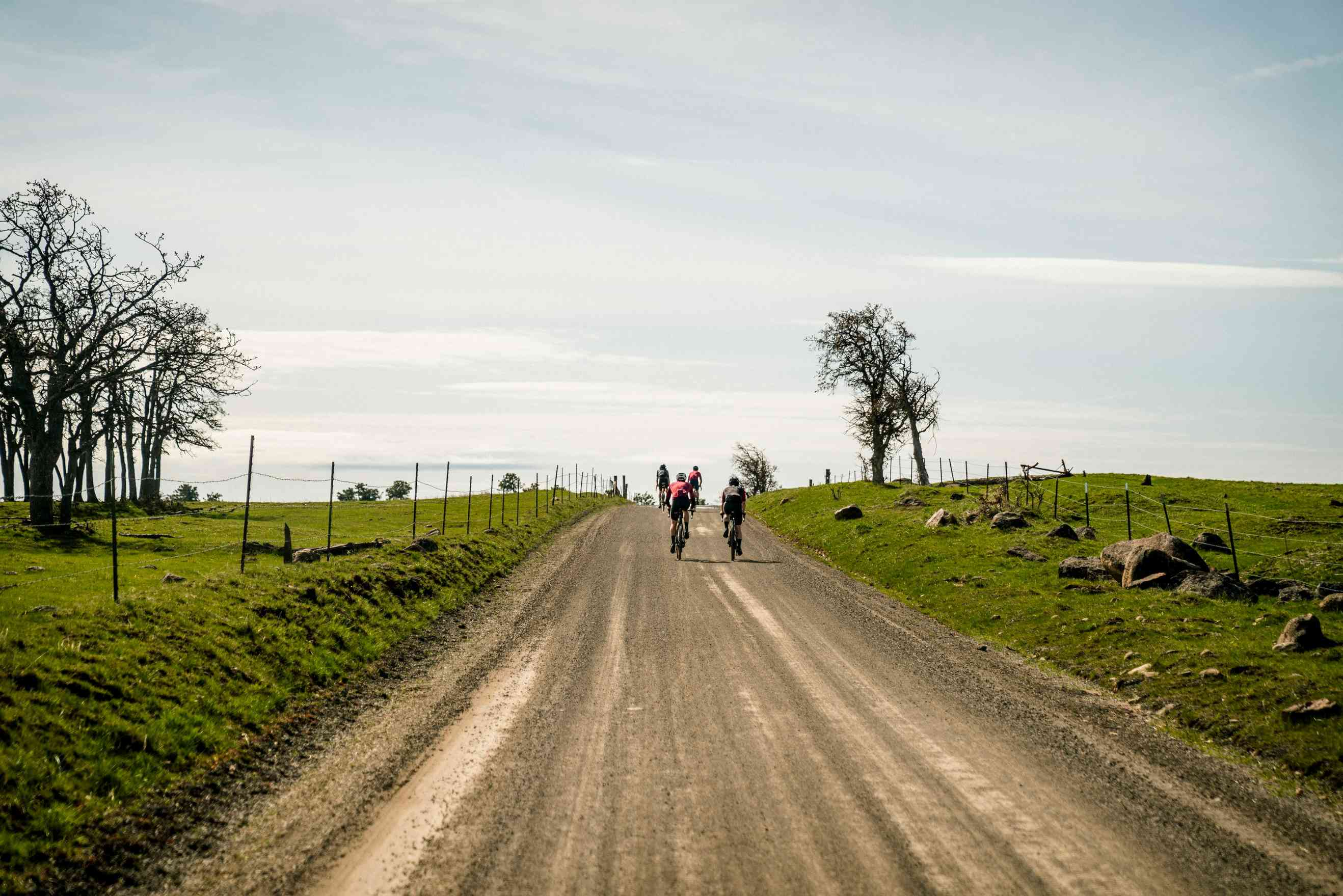
Everything you need to get to the start in Emporia ready for 200 miles of Flint Hills gravel: how to get an entry, what the course throws at you, how long it will take you, and a 16-week training plan from our coaches.
Key dates and deadlines for Unbound 2027
Sat 13 Feb 2027Latest start for a 16-week Unbound 200 training plan.
Fri 16 Apr 2027Sea Otter Classic Gravel, the last qualifier race for Unbound entries.
Sat 8 May 2027Four weeks out: time for your last long rehearsal ride on race kit.
Before race week2027 routes and athlete guides published on the official site (date to be confirmed).
Thu 3 Jun 2027Event weekend starts in Emporia, Kansas.
Fri 4 Jun 2027Unbound XL starts (3 pm in 2026).
Sat 5 Jun 2027Race day for the 200, 100, 50 and 25.
Unbound Gravel is the race that turned gravel into a discipline of its own. It started in 2006 as the Dirty Kanza 200 with 34 riders. Today close to 5,000 people line up across five distances, and the 200-mile race is the one every serious gravel rider wants on their palmarès.
It is also a race that punishes poor preparation. The roads are sharp flint, the course is unmarked, help is only allowed at a few checkpoints, and Kansas in early June can bring 38°C heat or, as in 2026, rain that turns the dirt into peanut-butter mud. Most riders who do not finish run out of fitness, fuel or tyres long before they run out of willpower.
Unbound Gravel 2027 at a glance
When3 to 6 June 2027. The 200 is on Saturday 5 June.
WhereEmporia, Kansas, USA. Flint Hills of east-central Kansas.
DistancesXL (350 miles), 200, 100, 50 and 25 miles, plus junior races.
The 200 in 2026207 miles (333 km), about 2,700 m (9,000 ft) of climbing.
Cut-off paceCheckpoint cut-offs are set at a 10 mph (16 km/h) average, including stops.
EntryCharity places, qualifier races, coaching packages, volunteering or the annual entry draw.
Unbound Gravel distances
Each distance is a different event. Pick the one you can train for properly, not the one that sounds best. A strong 100 is a better day than a 200 that ends in a broom wagon at Council Grove.
| Race | Distance | Start (2026) | Who it suits |
|---|
| Unbound XL | 350 miles (356 in 2026) | Friday 3 pm, rides through the night | Experienced ultra riders. Unsupported between resupplies. |
| Unbound 200 | 200 miles (207 in 2026) | Saturday from 5:50 am (elites), 6:30 am (age groups) | Riders with a big aerobic base and several 8+ hour rides behind them. |
| Unbound 100 | 100 miles | Saturday 7:30 am | Fit amateurs stepping up to a long gravel race. Usually the largest field. |
| Unbound 50 | 50 miles | Saturday, after the 100 | First gravel event or a big day for newer riders. |
| Unbound 25 | 25 miles | Saturday, after the 100 | Taster distance, families, first-timers. |
Courses change every year. We will update this guide when the 2027 routes are published.
The course: what makes Unbound hard
The 200 is not mountainous. The difficulty is the combination of distance, surface and conditions, all on a course where you fix your own problems.
- Flint. The Flint Hills roads are covered in sharp, fist-sized rock that cuts tyres and sidewalls. Punctures end more races here than fitness does.
- Weather. Afternoon temperatures have passed 38°C (100°F) in some years. In others, rain turns the dirt sections into clay that packs into frames until the wheels stop turning. In 2026, storms and hail hit before halfway and XL riders walked for around five hours in mud.
- Self-sufficiency. The course is unmarked, so you navigate from a GPS file. Outside help is only allowed at the official checkpoints. A support vehicle seen on course gets its rider disqualified.
- The second half. The 2026 course put rocky new sections, such as W Road at mile 130 and DD Avenue at mile 174, deep in the race, when legs and concentration are fading.
Checkpoints and cut-offs (2026 Unbound 200)
| Stop | Mile (km) | What you get | Cut-off |
|---|
| Checkpoint 1: Madison | 42 (68) | Your crew | 11:30 am |
| Water oasis: Texaco Hill | 64 (103) | Water only | – |
| Checkpoint 2: Matfield Green | 100 (161) | Your crew | 4:30 pm |
| Checkpoint 3: Council Grove | 160 (257) | Your crew | 11:30 pm |
| Water oasis: Americus | 189 (304) | Water only | – |
| Finish: Emporia | 207 (333) | Finish line | 3:00 am Sunday |
From the official 2026 Unbound 200 athlete guide. Miss a cut-off and you are no longer an official finisher.
Unbound finish-time calculator
Enter the average speed you hold while moving on long gravel rides, not your road speed. Expect to be noticeably slower on Flint Hills gravel than on tarmac, and much slower in mud.
How long will Unbound take you?
| Checkpoint | You arrive | Cut-off | Status |
|---|
How to train for Unbound Gravel
Unbound rewards durability: the ability to still produce power and make good decisions in hour nine. That comes from long, steady volume, specific work late in long rides, and practising everything you will do on race day. Here is how our coaches structure a 16-week build for the 200. Shorten the long rides proportionally for the 100.
Weeks 1–6: Aerobic base
Mostly zone 2, building weekly volume by about 10% with an easier week every third or fourth week. One session of tempo or sweet spot each week. Long ride grows to 4–5 hours, on gravel where you can.
Weeks 7–12: Build and durability
Long rides reach 6–8 hours, with tempo blocks placed in the final third. Add back-to-back days (long Saturday, 3 hours Sunday) every second weekend. Start fuelling at race rates on every long ride.
Weeks 13–15: Race-specific
One 8–10 hour rehearsal ride on your race bike, tyres and kit, ideally in heat. Practise navigation from a GPS file and fixing a sidewall cut. Shorter efforts at threshold to sharpen climbing on the punchy hills.
Week 16: Taper
Cut volume by 40–50% and keep a few short efforts so the legs stay sharp. Arrive in Emporia early enough to ride a section of the course and sleep. See our guide on how to taper properly before a race.
As a guide, plan on 8 to 14 hours a week at the peak of this plan for the 200. If you have less time than that, the 100 is the better target. Set your power training zones before you start so every session hits the right intensity.
Why riders hire a coach for Unbound
The plan above shows the shape of a good build. The hard part is making it work week after week around your job, your family and the weather, and arriving in Emporia fit, healthy and ready for 10 or more hours on flint. We have coached athletes to the Unbound start line before, and this is where a coach makes the difference:
- A plan built around your life. Peak weeks of 8 to 14 hours rarely fit a template. Your coach adjusts every week around work, travel, weather and how you are recovering, so missed sessions do not snowball.
- Durability, not just FTP. We analyse your rides in WKO5 to see how your power holds up after five or six hours, then train exactly that. It is what decides your second half at Unbound.
- Fuelling and heat tested in training. Your coach builds gut training, sweat-rate testing and heat preparation into the plan, and helps you write a checkpoint list for your crew.
- A pacing plan for your goal. Whether you are chasing the cut-offs or a sub-12-hour finish, you get target power and fuelling for each section of the course.
- Race intuition from the pro peloton. Our coaches have raced at World Tour level. They know when to sit in a group, when to let it go, and how to keep moving when the race falls apart in mud or heat.
- Someone in your corner. Months of long training rides are hard to keep up alone. Regular check-ins keep you consistent and honest.
Got an Unbound entry, or planning to get one? Tell us your distance and your goal and we will build your plan. Start with online coaching, get a one-off tailored Unbound training plan, or book a consultation to review your training and race plan with one of our coaches.
Fuelling and hydration
On a 10 to 14 hour day, fuelling decides your result as much as your FTP does. Train your gut the same way you train your legs.
- Carbohydrate: most riders aim for 60 to 90 g per hour, starting in the first hour. Build up to the top of that range in training, not on race day.
- Fluid: carry at least 2 litres; the official guide asks for enough for 50 miles. In heat you may need 750 ml or more per hour. Know your sweat rate before June.
- Sodium: use an electrolyte drink or capsules, especially if you are a salty sweater.
- Checkpoints: give your crew a written list for each stop: bottles, food, spare tube, sunscreen. Two minutes saved at each one adds up.
Bike, tyres and mandatory kit
Choose reliability over grams. Most age-group riders use tyres around 40 to 50 mm with tubeless sealant and plugs. Run a gear range that lets you sit and spin the short steep hills in hour ten. The 2026 athlete guide lists what to carry. The essentials:
- Approved helmet, GPS or navigation, mobile phone and a red rear light
- Water for at least 50 miles and food to reach the next checkpoint
- Two or more spare tubes (even if tubeless), tubeless plugs, patch kit and tyre boot or tape
- Pump and CO2, tyre levers, multi-tool with chain tool, spare quick links
- Cash or card for shops on the course
- A support person who can collect you if you abandon (crew-for-hire is available)
How to get an entry
- Charity places: guaranteed entry by raising money for a partner charity, first come, first served while places last.
- Qualifier races: at least 50 entries each go to finishers of Heathland Gravel, The Rad Dirt Fest, Big Sugar Gravel and Sea Otter Classic Gravel (16 April 2027), half on performance and half by random draw.
- Coaching packages: official packages that include a guaranteed entry for the XL, 200 or 100.
- Volunteering: 10 or more hours at Unbound or the Big Sugar Classic.
- Life Time membership: early access or guaranteed places for members of six months or more.
- Annual entry draw: most places are allocated each November for the following June. Check the official registration page for the next one.
Past Unbound 200 winners
| Year | Men | Women |
|---|
| 2026 | Mads Würtz Schmidt (9:14:51) | Sofía Gómez Villafañe (10:31:37) |
| 2025 | Cameron Jones (8:37, course record) | Karolina Migoń |
| 2024 | Lachlan Morton (9:11) | Rosa Klöser |
| 2023 | Keegan Swenson | Carolin Schiff |
| 2022 | Ivar Slik | Sofía Gómez Villafañe |
The 2026 men's winner averaged about 22 mph (36 km/h) in muddy conditions. The 200 cut-offs work out at 10 mph (16 km/h).