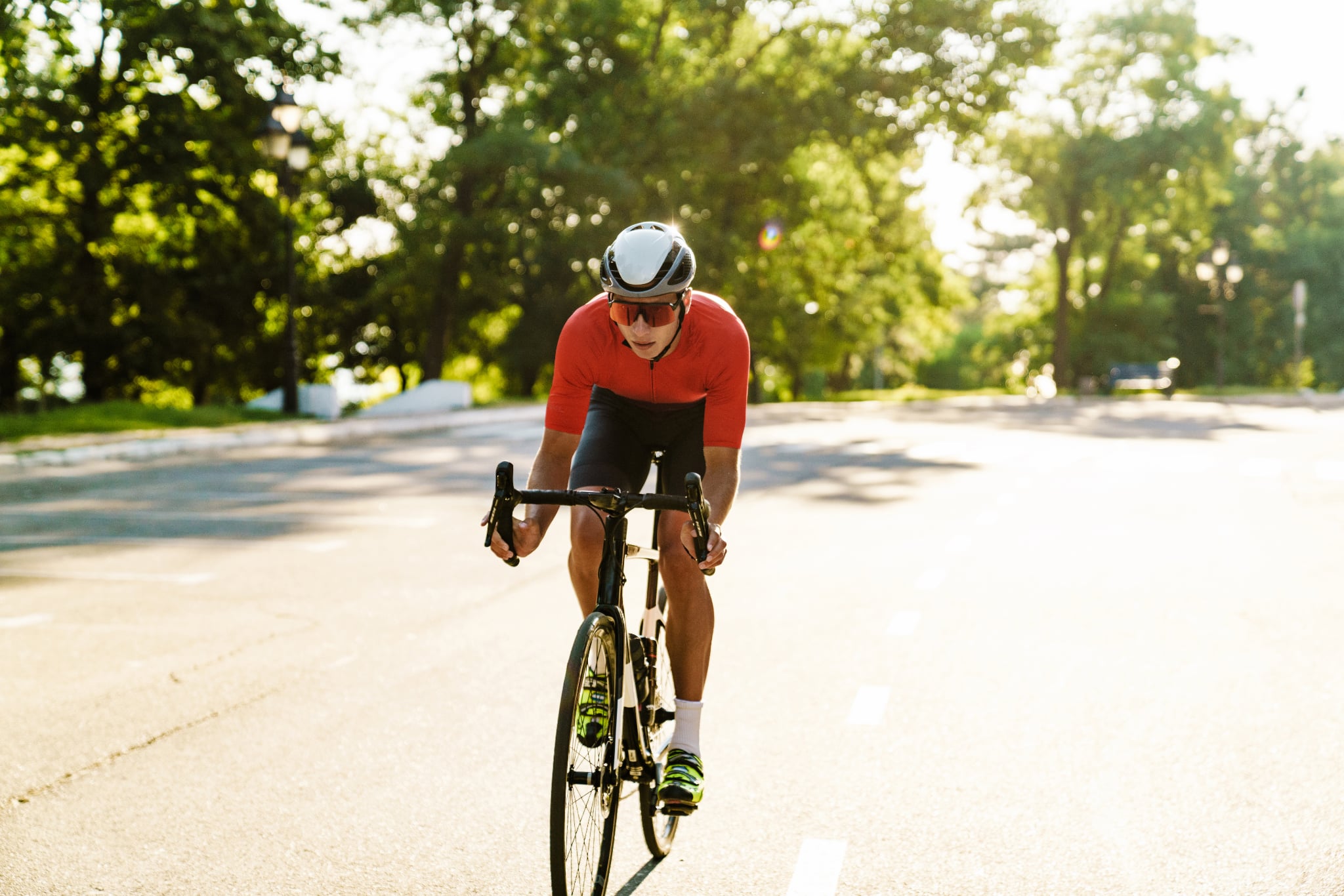
If you are asking whether cycling is good for weight loss, the short answer is yes, and I will give you the long answer because that is where the real fat loss lives. I have spent more than a decade coaching cyclists, from first-time riders trying to drop 15 kilograms to World Tour professionals shaving off the last 2% before a Grand Tour. The bike is one of the most effective and sustainable tools for losing weight I have ever worked with, but only when you understand the physiology and stop making the same mistakes that keep most riders spinning their wheels.
Cycling burns a large number of calories, is gentle on your joints, and is genuinely enjoyable, which means you will actually keep doing it. That last point matters more than any single workout. The best fat-loss program in the world is worthless if you quit in three weeks. In this guide I will walk you through exactly how cycling drives weight loss, how many calories you really burn, the training that works, the nutrition that supports it, and the traps that silently sabotage progress.
Why Cycling Is Good for Weight Loss
Weight loss comes down to one non-negotiable principle: a sustained energy deficit. You must, over time, expend more energy than you consume. Every credible piece of research on this topic, from tightly controlled metabolic ward studies to large meta-analyses, lands in the same place. There is no metabolic magic that bypasses the laws of thermodynamics, a point the research summarized by Harvard Health reinforces with hard numbers on how body weight drives energy expenditure. What differs between methods is how easy that deficit is to create and, crucially, how easy it is to maintain without wrecking your appetite, your joints, or your motivation.
This is where cycling shines. Consider the demands it places on your body. A moderate one-hour ride for a 75 kg rider burns roughly 500 to 700 calories. Push the intensity and that figure climbs well past 800. Because cycling is low-impact, you can accumulate this volume day after day without the joint stress that sidelines runners. A 95 kg beginner who tries to run themselves thin often ends up with shin splints or a sore knee within two weeks. That same person can ride five or six days a week comfortably, and that consistency is the entire game.
Cycling also builds and preserves lean muscle in the legs and glutes, which matters because muscle is metabolically active tissue. The more lean mass you carry, the higher your resting metabolic rate, and the more calories you burn even while sitting at your desk. Studies on commuter cycling, such as this analysis of active travel and body composition, have linked regular riding to lower body fat and improved metabolic health even without formal dieting. Crash diets that strip away muscle tank your metabolism and set you up for rebound weight gain. Cycling does the opposite. It protects the engine while you burn the fuel.
The Joint-Friendly Advantage
Excess body weight and high-impact exercise are a difficult combination. Running subjects your knees, hips, and ankles to forces equal to two to three times your body weight with every footstrike. For a heavier rider, that is a recipe for injury and frustration. On the bike, your weight is supported by the saddle and frame. The pedal stroke is smooth and circular, with no impact loading at all. This is why I steer almost every overweight client toward the bike first. It lets them build the aerobic base and burn the calories they need without breaking down. As fitness improves and weight drops, you can layer in other activities, but the bike is the ideal entry point.
How Many Calories Does Cycling Actually Burn?

This is the question I get most often, and the honest answer is: it depends, but the numbers are very encouraging. Calorie expenditure on the bike is driven by three things: your body weight, your intensity (measured most accurately in watts), and your duration. A heavier rider burns more at the same effort because moving more mass requires more energy. Higher power output burns more per minute. Longer rides obviously accumulate more total energy.
Here are realistic figures for a one-hour ride, which you can use for planning:
- Easy recovery pace (a 70 kg rider): roughly 350 to 450 calories
- Moderate endurance pace: roughly 500 to 650 calories
- Brisk tempo riding: roughly 650 to 800 calories
- Hard interval session or hilly group ride: 800 to 1,000+ calories
If you have a power meter, the math becomes beautifully precise. The human body converts chemical energy into mechanical work at roughly 20 to 25% efficiency on the bike. A useful coaching shortcut is that your energy expenditure in kilojoules is almost identical to your energy expenditure in calories. So if your head unit shows you produced 700 kJ during a ride, you burned approximately 700 calories. This is one of the great advantages of cycling for weight management. You get an objective, reliable number rather than the wildly optimistic guesses that fitness watches produce for most activities. If you do not yet ride with power, our FTP calculator is a good place to understand your power numbers, and the power zones calculator will show you exactly what intensity each session should target.
To put this in context, a pound of body fat stores about 3,500 calories, and a kilogram about 7,700. If you ride five times a week and average 600 calories per session, that is 3,000 calories of expenditure on top of your normal daily burn. Combine that with even modest dietary discipline and you can realistically lose half a kilogram of fat per week, which is the sweet spot for sustainable, muscle-sparing fat loss.
The Afterburn and Why Intensity Matters
Calories burned during the ride are only part of the story. After a hard session, your body continues to consume extra oxygen to restore itself to baseline, a phenomenon known as excess post-exercise oxygen consumption, or EPOC. This recovery process clears metabolic byproducts, replenishes energy stores, and repairs tissue, and it all costs energy. The harder the session, the larger and longer this afterburn effect. Research on interval training and post-exercise metabolism, including work catalogued in the peer-reviewed literature on PubMed, shows that higher-intensity interval work produces a meaningfully greater EPOC than steady moderate exercise, which is one reason intervals are so valuable for time-pressed riders trying to lose weight.
There is an old myth that you must train slowly in the so-called fat-burning zone to lose weight. It is true that at lower intensities a higher percentage of the calories you burn come from fat. But the total energy expenditure at higher intensities is so much greater that you burn more total fat anyway, plus you bank the afterburn. The fat-burning zone is one of the most misunderstood ideas in fitness. What actually matters for weight loss is total energy expenditure over the week, not the fuel mix during any single ride. That said, there is real value in low-intensity riding too, which I will come back to.
Building a Cycling Routine That Burns Fat
The most effective weight-loss program for cyclists blends three types of riding: long easy endurance rides, high-intensity intervals, and one or two genuinely hard sessions. This is the same polarized structure I use with competitive athletes, scaled to your fitness. The combination maximizes total weekly calorie burn while developing the aerobic engine that lets you ride longer and harder over time, which in turn lets you burn even more. It is a virtuous cycle.
The Foundation: Zone 2 Endurance Rides
The backbone of any fat-loss program is steady, conversational riding at what coaches call Zone 2. This is an effort where you could hold a conversation, breathing is elevated but controlled, and you feel like you could keep going for hours. These rides do several things at once. They burn a substantial number of calories, they teach your body to oxidize fat efficiently by increasing mitochondrial density, and they are low-stress enough that you can do them frequently without burning out. Aim for one or two longer endurance rides each week, building from 60 minutes toward two or three hours as your fitness allows. To pin down your exact Zone 2 range, use our heart rate training zones calculator, which will give you personalized boundaries rather than generic guesses.
The Accelerator: Interval Training
If endurance rides build the base, intervals are what accelerate fat loss when you are short on time. High-intensity interval training packs a large calorie burn and a strong afterburn into 30 to 45 minutes. A simple, brutally effective session is 4 to 6 repeats of 4 minutes near your maximum sustainable effort, with 4 minutes of easy spinning between each. Another favorite of mine for fat loss is 30-second sprints with 90 seconds of recovery, repeated 10 to 12 times. These sessions are demanding, so limit them to one or two per week, with easy days in between. Done consistently, intervals also raise your functional threshold power, meaning every future ride burns more calories at the same perceived effort.
A Sample Week
Here is a realistic week for someone with a moderate fitness base who wants to lose weight while building genuine cycling fitness:
- Monday: Rest or 30 minutes very easy spinning
- Tuesday: Interval session, 45 to 60 minutes total (for example 5 x 4 minutes hard)
- Wednesday: Zone 2 endurance, 60 to 90 minutes
- Thursday: Rest or short recovery ride
- Friday: Sprint intervals, 45 minutes total
- Saturday: Long endurance ride, 2 to 3 hours at conversational pace
- Sunday: Easy social ride or full rest
That structure delivers a large weekly calorie burn, around 3,000 to 4,000 calories of training expenditure for most riders, while keeping the stress manageable and the variety high enough that you stay engaged. If you would rather have a plan built precisely around your fitness, schedule, and goals, our coaches design tailored training plans that take all the guesswork out of it.
Indoor Cycling for Weight Loss
Do not underestimate the indoor trainer as a fat-loss weapon. Weather, daylight, and traffic are the most common reasons people skip rides, and the trainer removes all three excuses. Smart trainers paired with apps like Zwift or TrainerRoad let you execute precise interval sessions with zero coasting, which means a 45-minute indoor session can burn as many calories as a 90-minute outdoor ride with all its stop-and-go. There is no freewheeling down hills, no waiting at junctions, just continuous productive work. For busy people losing weight on a tight schedule, structured indoor intervals are some of the most time-efficient fat-burning sessions available.
Why Nutrition Decides Everything
I need to be direct here, because it is the single most important thing I can tell you. You cannot out-train a bad diet. I have watched riders complete enormous training weeks and lose nothing, because they unconsciously ate back every calorie they burned and then some. Exercise is remarkably good at making you hungry, and it is alarmingly easy to undo a 600-calorie ride with one post-ride pastry and a sugary recovery drink.
Weight loss requires that the energy deficit survives the whole day, not just the hour you spend riding. Here is how I coach clients to manage this without misery:
- Fuel the work, not the couch. Eat carbohydrates around your hard and long rides when your body can use them, and keep meals leaner on easy or rest days. This matches your intake to your actual energy demand.
- Prioritize protein. Aim for roughly 1.6 to 2.0 grams of protein per kilogram of body weight daily. Protein preserves the muscle you are working to keep, keeps you full, and has a higher thermic effect than carbs or fat.
- Be honest about liquid calories. Sports drinks, recovery shakes, and that flat white add up fast. On easy rides under 90 minutes you generally do not need any of them. Water is enough.
- Aim for a modest deficit. A daily shortfall of 300 to 500 calories drives steady fat loss while leaving you enough energy to train well. Aggressive deficits cannibalize muscle and crater your power output.
One practical tactic that works beautifully with cycling is doing some of your easy Zone 2 rides in a slightly fasted state, for example before breakfast. Because the intensity is low, your body is happy to draw on fat stores, and you train your metabolism to be more flexible. I do not recommend this for hard interval sessions, which need fuel to hit the required power, but for easy endurance work it is a useful tool. The principle here is to match fueling to the demand of the session, a concept that applies all the way up to the professional ranks.
The Mistakes That Stall Weight Loss
Over the years I have seen the same handful of errors derail riders again and again. Avoid these and you will be ahead of almost everyone.
Riding Every Ride at the Same Medium Pace
This is the most common trap. Most amateur riders ride too hard on their easy days and not hard enough on their hard days, leaving them stranded in a grey zone that is too taxing to do frequently but not intense enough to drive real adaptation. Your easy rides should be genuinely easy, and your hard rides genuinely hard. This polarization both increases total calorie burn and improves fitness far more effectively than endless moderate riding.
Overeating to Reward the Effort
The psychological trap of I earned this is real and devastating. A 700-calorie ride followed by a 900-calorie indulgence leaves you in a surplus. The fix is awareness, not deprivation. Track your intake honestly for a couple of weeks and you will quickly see where the leaks are.
Ignoring Strength and Recovery
Two short strength sessions a week, focused on squats, lunges, deadlifts, and core, will preserve muscle, boost your metabolism, and make you a more powerful and durable rider. Recovery matters just as much. Poor sleep elevates the hunger hormone ghrelin and the stress hormone cortisol, both of which work against fat loss. If you are training hard but sleeping five hours and eating erratically, the weight will not move. Watch for the warning signs of doing too much, because overtraining will stall your progress as surely as overeating.
How Long Until You See Results?
Be patient and trust the process. With a sensible plan, most people see meaningful changes within four to six weeks: clothes fitting better, more energy, and the first clear movement on the scale. A realistic and sustainable rate of fat loss is around 0.5 to 1% of body weight per week. For a 90 kg person that is roughly half a kilogram to just under a kilogram weekly, which adds up to a substantial transformation over a few months.
Resist the urge to weigh yourself daily and panic at every fluctuation. Body weight swings two or three kilograms day to day based on hydration, glycogen, and sodium. Weigh yourself at the same time each morning, two or three times a week, and watch the trend over weeks rather than days. Better still, track how your riding feels. When the same loop that left you gasping a month ago now feels comfortable, that is fitness and fat loss working together, even on days the scale is stubborn.
Cycling Versus Running, Swimming, and the Gym
People often ask me how cycling stacks up against other forms of exercise for fat loss. The honest answer is that the best exercise for weight loss is the one you will do consistently, several times a week, for months on end. That single factor swamps the modest differences in calorie burn between activities. Still, it is worth understanding cycling's specific strengths.
Compared with running, cycling burns a similar number of calories per hour at matched effort, but it does so with a fraction of the impact stress. This means you can do far more of it before your body protests, which is decisive for heavier riders or anyone returning from injury. Running is brilliantly time-efficient and convenient, but the injury rate is high precisely because the impact accumulates. I have lost count of the clients who tried to run themselves lean, got hurt, stopped entirely, and regained everything. On the bike they simply kept going.
Swimming is similarly joint-friendly and works the upper body more, but it requires pool access, offers less precise intensity control, and tends to leave many people ravenously hungry afterward. The gym and resistance training are essential complements rather than substitutes. Lifting builds and preserves the muscle that keeps your metabolism high, but a typical strength session burns relatively few calories during the workout itself. The ideal program for most people combines the large aerobic calorie burn of cycling with two short strength sessions a week. That pairing burns fat while protecting the engine, and it is exactly the structure I build for clients who want lasting results.
One more point in cycling's favor: it scales with your life. You can commute on it, replacing dead car time with productive calorie burn. You can ride socially, turning exercise into time with friends. You can explore new places on it. Very few forms of exercise integrate into a normal life as seamlessly, and that integration is what turns a short-term diet into a permanent change in body composition.
Common Questions About Cycling and Weight Loss
How many times a week should I cycle to lose weight?
For most people, four to six rides a week produces excellent results, provided the intensity is varied and nutrition is in check. Three rides can work if they are well-structured and you are disciplined with food, but frequency helps because it raises your total weekly energy expenditure and keeps the habit alive. Consistency over months matters far more than any single heroic ride.
Will cycling make my legs bulky instead of lean?
No. Endurance cycling builds lean, efficient muscle, not bulk. The dramatic legs you see on track sprinters come from years of dedicated heavy gym work and sprint training, not from endurance riding. For the vast majority of people, regular cycling produces toned, defined legs while stripping away the fat that sits on top of the muscle.
Should I ride fasted to burn more fat?
Easy, low-intensity rides done before breakfast can be a useful tool to improve fat oxidation, but they are not a magic bullet, and they are inappropriate for hard interval sessions that demand fuel. What ultimately determines fat loss is your total energy balance across the day and week, not whether one particular ride was fasted. Use fasted riding as a minor optimization, not a foundation.
Can I lose weight on an indoor trainer alone?
Absolutely. Structured indoor sessions are some of the most time-efficient calorie-burning workouts available because there is no coasting. Many of my clients do the majority of their fat-loss training indoors, especially through winter, and see superb results. The trainer removes every weather and daylight excuse, which is precisely why it works.
Is Cycling Good for Weight Loss? The Bottom Line
Cycling is not just good for weight loss, it is one of the most effective and sustainable approaches I know. It burns a large number of calories, protects your joints, preserves and builds muscle, and is enjoyable enough that you will keep doing it for years rather than weeks. The riders who succeed are the ones who combine consistent training with honest nutrition, who ride easy on easy days and hard on hard days, and who give the process the weeks it needs to work.
The bike will get you remarkably fit and lean if you let it. What separates the people who transform their bodies from those who stall is almost always structure and accountability. If you want a program built specifically for your body, your schedule, and your goals, with a coach guiding every step, this is exactly what we do. Apply for coaching and let us build you a plan that turns the bike into the most powerful weight-loss tool you have ever used. Clip in, be consistent, and the results will follow.