TrainerRoad, Zwift, TrainingPeaks, JOIN, Wahoo, Garmin Coach: there has never been more choice for a cyclist who wants to get faster. Most of these apps cost less per year than one month of personal coaching, and several now use AI to adjust your plan. So is a cycling coach vs training apps even a fair fight anymore?
It is, but not in the way most comparisons frame it. Apps and coaches solve different problems. An app gives you structure. A coach makes decisions for you, and those decisions get more valuable the more complicated your life, goals and body get. This guide compares the main apps on price, features and limits, then explains when an app is enough and when a coach is worth paying for. Prices were checked in November 2026.
The Short Answer
- Choose an app if you are new to structured training, ride mostly indoors, have a stable schedule, and your goal is general fitness or a first event.
- Choose a coach if you have plateaued for more than a season, are training for a specific race or A-event, juggle an unpredictable schedule, are returning from injury, or are over 40 and recovering differently than you used to.
- Use both if you like an app's workout player or virtual world. Most coaches, including ours, can deliver workouts straight into the app you already use.
Cycling Coach vs Training Apps: Cost Compared
Here is what each option costs at full list price, before discounts or free trials.
Sources: TrainerRoad payment options, Zwift pricing, TrainingPeaks pricing, JOIN pricing, Wahoo's 2026 subscription tiers, Garmin cycling training plans, and our own coaching pricing.
The gap is real: a year of coaching costs roughly 15 to 35 times more than a year of TrainerRoad or Zwift. The question is not whether a coach costs more. It is whether the extra decisions a coach makes are worth it for you right now.
Apps vs Coach-Written Plan vs 1-1 Coach: Feature by Feature
Price is only half the comparison. Here is what each option actually does for you.
What Training Apps Do Well
Structure, for almost nothing
The biggest jump in performance most riders ever make is going from riding however they feel to following a plan with a purpose for each session. Any of the apps above will give you that. If you have never trained with structure, an app will probably make you faster within a couple of months.
Indoor workouts that are easy to execute
ERG mode, a clear workout player, and a fixed target make indoor intervals hard to get wrong. If most of your riding is on a smart trainer, this matters. Our guide to the best indoor cycling apps goes through each app's indoor experience in detail, and our best indoor cycling trainers roundup covers the hardware.
Adaptation, within limits
The newer apps adjust your plan automatically. TrainerRoad's Adaptive Training changes upcoming workouts based on how you completed the last ones, and its AI FTP Detection estimates your FTP from ride data so you test less often. JOIN reshuffles your week when you miss a session or your availability changes. Garmin Coach can swap a threshold session for a recovery ride after a bad night's sleep. These are genuinely useful features.
Motivation and community
Zwift's group rides and racing keep many riders consistent through winter. Consistency beats perfect programming, so if a game world is what gets you on the bike, that is a real performance benefit.
Where Apps Fall Short
Apps adapt to the data they can see. That is their strength, and it is also where they stop.
- They have never raced. This is the biggest gap. An app has never sat in a World Tour peloton, felt a race split in the crosswinds, or had to decide in a split second whether to chase or wait on the final climb. Our coaches have, racing for teams like BMC Racing, Bora-Hansgrohe and AG Insurance-Soudal at races from Amstel Gold to the Tour de France Femmes. That experience gives a coach an intuition for when to push, when to back off, and what a race will really ask of you. No algorithm built on workout files has it, and no update will give it one.
- They only see the ride. An algorithm sees power, heart rate, and whether you finished the workout. It does not know you slept four hours because of a newborn, that your job is in a crunch week, or that your knee has felt off on climbs. A coach asks.
- They optimise within a template. Most app plans are built from fixed blocks: base, build, specialty. Real seasons are messy. You have two A-races six weeks apart, a family holiday in the middle of your build, a stage race with a long climb on day three. Fitting that together is a judgment call, not a template. Our article on how to structure your cycling season shows how many trade-offs are involved.
- They cannot diagnose a plateau. If your FTP has not moved in a year, the problem is rarely "you need more intervals". It might be too much intensity, too little fuelling, poor recovery, a limiter the plan never targets, or an FTP set too high from the start. Spotting which takes someone looking at the whole picture.
- They do not coach the race. Pacing a 40-minute climb, when to follow a move, how to fuel a five-hour gran fondo, how to taper: these are where many riders lose the fitness they spent months building. See our guide to how to taper properly before a race for one example.
- Nobody holds you accountable. Skipping a workout in an app costs nothing. Explaining to your coach why you skipped three is a different feeling.
What the Research Says About Individual Training
There is no good head-to-head study of coached riders vs app users, so be wary of anyone claiming one. What the research does show is that people respond very differently to the same training, which is the core argument for individual adjustment.
A review by Bouchard and Rankinen of the HERITAGE Family Study and related research found that responses to the same standardised training programme ranged from almost no improvement in VO2 max to a doubling of it (Bouchard & Rankinen, Medicine & Science in Sports & Exercise, 2001). In other words, a plan that works brilliantly for one rider can do little for another.
The encouraging part comes from Montero and Lundby. In their 2017 study, adults trained one to five times a week for six weeks. At the lowest training dose, many participants showed no meaningful improvement. At the highest doses, everyone did. And when the "non-responders" added two sessions a week, they all improved too (Montero & Lundby, The Journal of Physiology, 2017). Lack of progress is usually a dosing problem, not a talent problem, and the fix is to adjust the plan for the person.
The other side of dosing is doing too much. The joint consensus statement on overtraining from the European College of Sport Science and the American College of Sports Medicine stresses that no single marker reliably detects overreaching, and that prevention depends on monitoring training load, performance, mood, and life stress together (Meeusen et al., 2013). An algorithm can track load. Weighing it against how you feel and what is happening in your life is what a coach does every week.
TrainerRoad vs Zwift: Which App Is Better for Training?
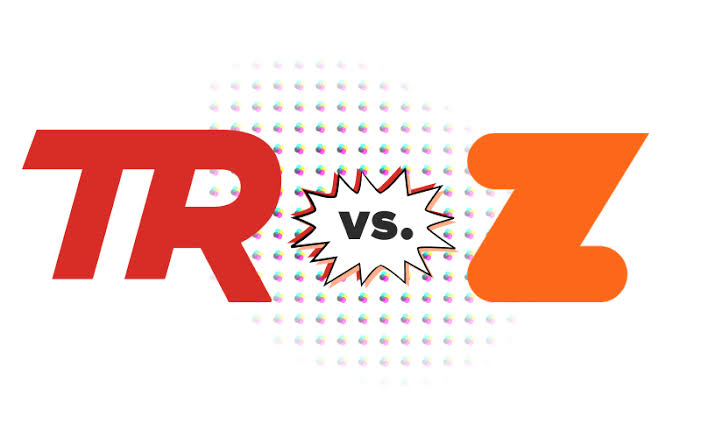
This is the comparison most riders search for first, so it is worth answering directly.
- TrainerRoad is a training tool first. Its plans, Adaptive Training, and AI FTP Detection are built around getting faster. The interface is plain, and there is no virtual world unless you link it with Zwift. Best for riders who want efficient, structured indoor training and do not need entertainment.
- Zwift is a virtual riding world first. It has training plans and workouts, but its real strengths are group rides, racing, and keeping you engaged. Best for riders who struggle to stay motivated indoors.
- Price is almost the same: about $200 a year for either.
- Using both is common. TrainerRoad workouts can be ridden inside Zwift, which gives you TrainerRoad's structure with Zwift's scenery.
Neither app plans your season around your races, travel, and work, and neither analyses your data the way a coach does. If structure and motivation are your only problems, either will help. If you have a plan and are still stuck, the app was never the limiting factor.
TrainingPeaks fits differently. It is mainly a training log and analytics platform rather than a workout app, and it is the platform most coaches use to deliver plans. If you are comparing TrainerRoad vs TrainingPeaks, the real comparison is an app's automatic plan vs a plan someone writes for you inside TrainingPeaks. Our guide to the core TrainingPeaks metrics explains fitness, fatigue, and form if you are new to it.
Is an AI Cycling Coach as Good as a Human Coach?
AI coaching is improving quickly, and for many riders it is a big step up from a fixed plan. An adaptive app reacts to what you did yesterday far faster than a static PDF ever could.
But an AI coach is still limited to the inputs it gets. It does not watch your race file and notice you lost the group because you were out of position, not out of power. It does not hear in your voice that you are burning out. It cannot decide that this season your best result will come from skipping a race. Those are the decisions that separate a good season from a great one, and they are still human decisions.
The practical answer: AI apps are a strong choice for structured fitness. A human coach is worth it when the decisions get complicated or the stakes get higher.
When a Coach Is Worth the Money
From working with riders from beginners to professionals, these are the situations where a coach usually pays for itself:
- You have plateaued. Your FTP or results have not moved in six to twelve months despite training consistently. Check where you are now with our FTP calculator.
- You have a specific, important goal. A national championship, a qualifier, a stage race, or a once-in-a-lifetime event like a gran fondo abroad, where getting it wrong costs a year.
- Your schedule is unpredictable. Shift work, travel, or young children mean the plan has to change every week, and a template keeps breaking.
- You are a masters rider. Recovery changes with age, and the balance of intensity, volume, and strength work becomes more individual.
- You are coming back from injury, illness, or a long break. Building back safely needs more judgment than an algorithm has.
- You want to understand your data. Power files, power-duration curves, and training load tell a story. A coach reads it with you. We use WKO5 for this, which we explain in how WKO5 helps transform cycling fitness.
And when an app is the better choice: you are new to structured training, your budget is tight, or your main goal is to ride more consistently. Start with an app, set your power training zones, and come back to coaching when progress stalls.
Which Should You Choose? Find Your Situation
Match your situation to the option that usually works best.
The Middle Ground: Training Plans and One-Off Consultations
It is not a choice between $200 and $3,000. There are options in between:
- A coach-written training plan. Our tailored training plans give you a professional structure for an event or season without ongoing coaching.
- A one-off consultation. A coaching consultation lets you review your data, plan, and goals with a coach and keep using your app. Many riders use this once or twice a season to sanity-check their direction.
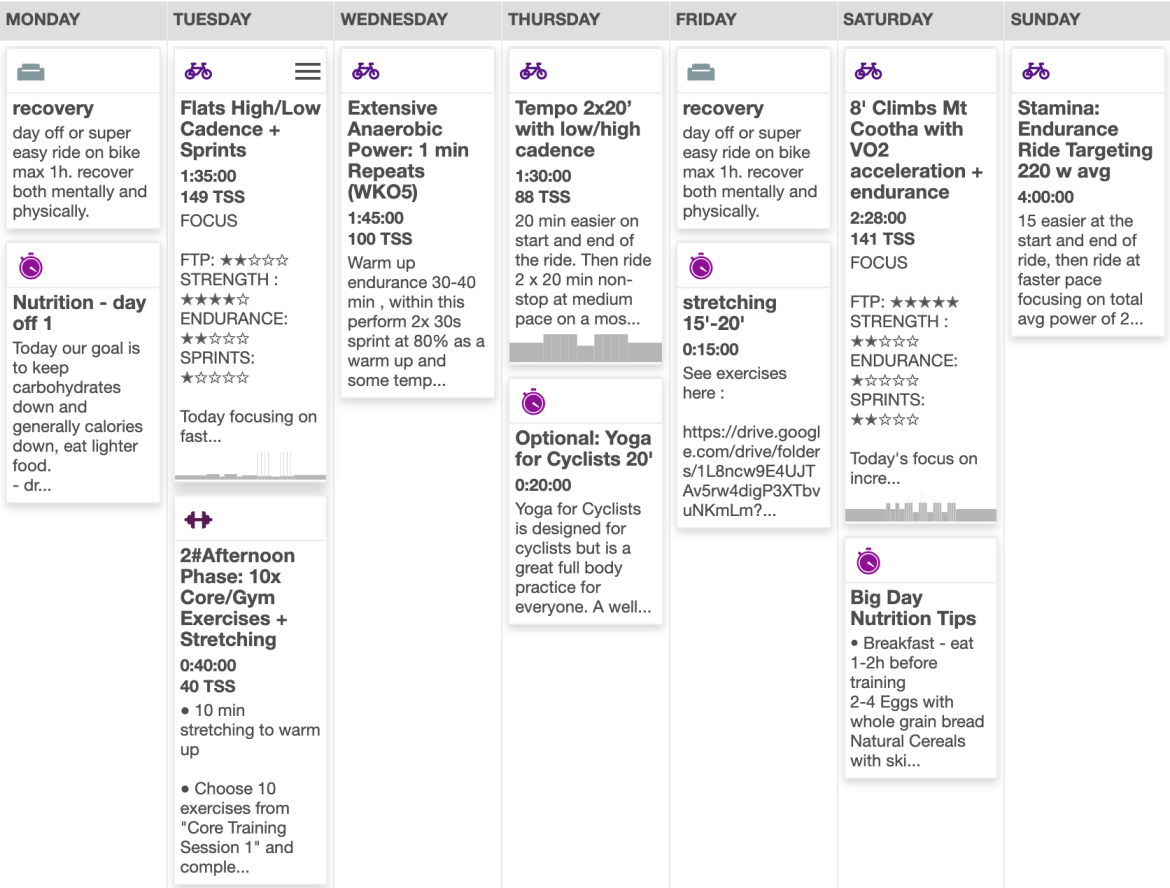
- App plus coach. Keep the app you enjoy riding with and let a coach write the workouts. With 1-1 coaching, your sessions live in TrainingPeaks and sync from there to the major training apps and head units.
How to Choose a Cycling Coach
If you decide a coach is right for you, look for:
- Relevant experience. Have they coached riders with your goals and discipline? Racing a criterium and riding a 200 km sportive need very different preparation.
- Clear communication terms. How often do they adjust your plan, review your rides, and reply to messages? These usually define the price tiers.
- A process, not just workouts. Ask how they set your annual plan, test your fitness, and decide when to change direction.
- No lock-in. You should be able to cancel if it is not working. Our coaching has no minimum contract.
You can read about our coaching team and their backgrounds before you decide.
Frequently Asked Questions
Is TrainerRoad worth it?
For most riders who train mainly indoors and want structure, yes. At about $209 a year it is one of the most effective training tools for the money. It is less useful if you mostly ride outdoors on unstructured terrain, or if your limiter is something other than workout structure.
How much does a cycling coach cost?
Typically $150 to $600 a month, depending on how much contact and analysis is included. Coaches on the TrainingPeaks marketplace list tiers from $149 to $359 a month, and our 1-1 coaching ranges from $249 to $599 a month. One-off plans and consultations cost less.
Can I use Zwift or TrainerRoad with a coach?
Yes. Coaches usually write workouts in TrainingPeaks, which can sync them to Zwift, Wahoo, and Garmin devices, among others. You keep the app experience and get a plan built for you.
Is Garmin Coach good for cycling?
It is a good free option if you already own a compatible Garmin Edge, heart rate monitor, and power meter. The plan adapts using your training load and recovery data. Like other apps, it works from data alone and does not plan around races, travel, or life outside cycling.
Is an AI cycling coach as good as a human coach?
For structured fitness, AI apps are a strong and affordable choice. They react quickly to your ride data, but they cannot weigh your life, race tactics or long-term goals the way a human coach can.
Will a coach make me faster than an app?
Not automatically. A beginner following any reasonable plan will improve. The difference shows up later, when gains slow down, goals get specific, and the right decision is less obvious. That is where individual adjustment matters most.
Find Out Which Option Is Right for You
If an app is giving you steady progress, keep going. If you are training hard and not getting faster, the problem is unlikely to be the app, and more of the same will not fix it.
Compare our online cycling coaching options and pricing, or book a consultation to talk through your training with a coach before committing. Bring your app data. We will tell you honestly whether you need a coach.